StarterTroubleshootingWild YeastMaintenance
Why Is My Sourdough Starter Not Rising? (Fix It)
9 min read
Beginner
A real diagnostic guide for a sourdough starter that won't rise or bubble: cold, feeding, water, flour, hooch, runny starter, and mold safety.
 ArtisanCrust
It's day four. The jar that was bubbling like champagne yesterday sits there flat, smelling like nail polish met a gym sock, and you are absolutely certain you've killed it. You probably haven't. A starter that won't rise is one of the most panicked searches in baking, and almost every time, it's a quiet jar, not a dead one.
Let's clear the scariest question out of the way before anything else. A starter is a population of microbes in the millions, and Wild Yeast spores are tough. They survive cold, hunger, and weeks of neglect by going dormant, not by dying. So unless one specific thing has happened, your starter is sleeping, not gone.
There is exactly one situation that means "throw it out and start over," and it has nothing to do with smell or bubbles. It's mold: fuzzy, raised spots, usually pink, orange, green, or black, like something growing in a forgotten container. Pink or orange streaks count too. If you see fuzz, bin the whole jar, wash it hot, and begin again. Don't scrape it off and hope. With mold, there's no negotiating.
Everything below that line is a tuning problem. A sharp, vinegary, acetone-like smell is fine. A thin gray liquid on top is fine. A flat surface is fine. None of those mean death. They mean your starter is trying to tell you which dial to turn, and the rest of this guide is about reading that message.
If your starter has stalled, check the room temperature before you change anything else. Temperature is the throttle on the whole culture, and most "dead" starters are just cold.
Wild Yeast is happiest at 22 to 26 °C. Drop to 18 °C and activity roughly halves. Below 15 °C it slows to a near-stop, which is why a starter on a cold winter windowsill looks lifeless while the same jar three feet away on top of the fridge is thriving. The fix is embarrassingly simple: move it somewhere warm. The top of the fridge, inside an oven with only the light on (check it stays under 30 °C), or near any appliance that runs warm. Give it a fresh feed at the warmer spot and check again in 6 to 8 hours.
A starter is a living thing on a metabolic budget. Feed it too seldom and it eats through its food, the acid climbs, the pH crashes below the yeast's working range, and the rise stops. This is the most common reason an established starter quietly fades over a week or two.
Two related mistakes pile on here. The first is keeping too much old starter at each feed. If you feed 100 g of tired, acidic starter with only 50 g of fresh flour and water, you've barely diluted the acid, so the culture stays sour and sluggish. The fix is a bigger feed ratio: discard down hard, keep only 20 to 40 g, and feed it generously. If your ratios feel like guesswork, the feeding ratios guide breaks down exactly when to use 1:1:1 versus 1:5:5. The second mistake is irregular timing. Microbes run on rhythm, so feed at roughly the same hours each day and the culture learns to peak on schedule.
Two ingredient problems can quietly suppress a starter that's otherwise being treated well.
Chlorine and chloramine in tap water are designed to kill microbes, which includes the exact microbes you're farming. Heavily chlorinated water won't always wipe a starter out, but it can hold it back. The fix costs nothing: fill a jug and leave it uncovered overnight so the chlorine gasses off, or use filtered or bottled water. Chloramine is more stubborn and doesn't evaporate, so a simple carbon filter is the safer bet if your utility uses it.
Flour matters more than beginners expect. Bleached flour has had some of its natural microbes and enzymes stripped, and self-rising flour contains salt and chemical leaveners that fight your culture. Whole grain flours, especially whole rye and whole wheat, carry far more wild yeast, minerals, and enzyme activity on the bran. A sluggish starter often perks up within a feed or two once you swap in even 20% whole grain. Think of it as a vitamin shot for the jar.
If your starter is brand new and it rose on day 2 then went flat and funky on day 3, stop right there. Nothing is wrong. This is the single most misread moment in starting a starter, and panic kills more young cultures than any real problem does.
That exciting day-2 rise is a false rise, driven mostly by Leuconostoc and other bacteria that bloom early in near-neutral conditions. As they produce acid, they poison their own environment, crash, and leave the flat, slightly cheesy day-3 jar. But that same falling pH is exactly the cue the real Wild Yeast and acid-loving LAB have been waiting for. The lull is a shift change, not a death. Feed straight through it and a working starter usually appears by day 5 or 6. The full week-by-week walkthrough lives in the starter-from-scratch guide if you want to know what each day should look like.
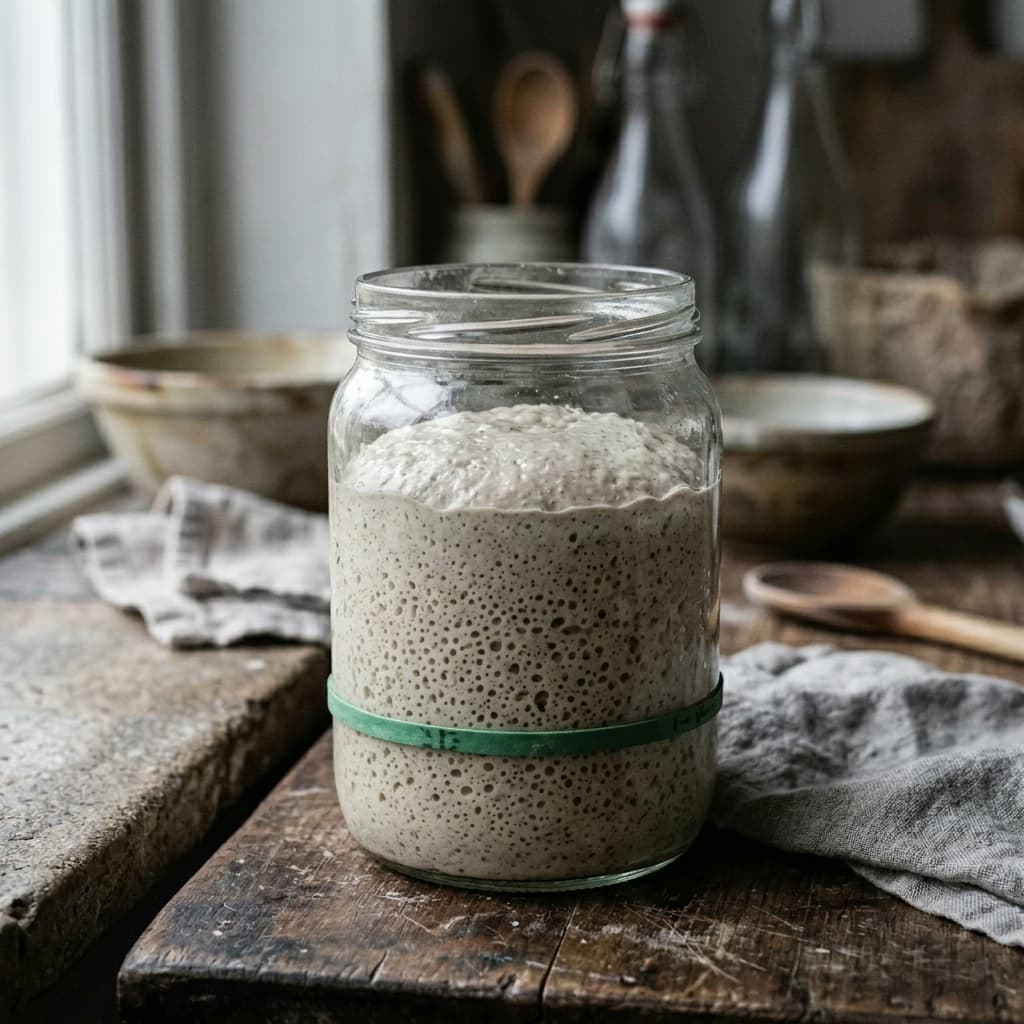
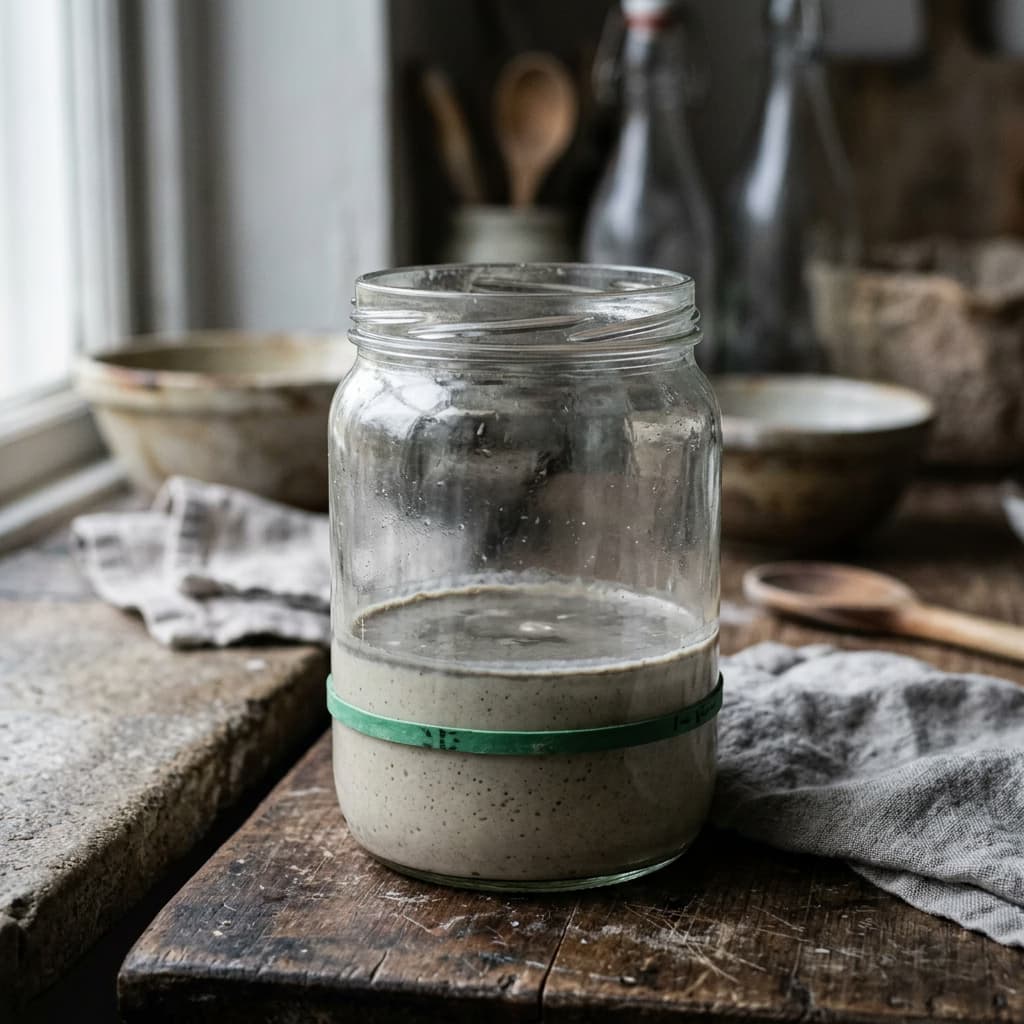 Sluggish and flat
A starter that's gone thin and watery, or grown a layer of gray liquid, is sending the clearest signal of all: feed me, and maybe change something.
Hooch is the easy one. That thin gray or brownish liquid is alcohol the yeast made, and it simply means the starter is hungry and overdue. Pour it off for a milder culture, or stir it in for a tangier one, then feed. If hooch keeps reappearing within a day, you're feeding too rarely or keeping the jar too warm.
A genuinely runny, soupy texture is usually overhydration, heat, or a long gap between feeds working together. As a starter sits, the enzyme amylase keeps breaking flour starch down into sugars and liquid, so the longer it waits, the looser it gets. Firm it back up by feeding with a little more flour than water (try 50 g starter, 55 g flour, 45 g water), keeping it cooler, and feeding more often. Within a feed or two it should return to a thick, glossy, pancake-batter consistency that holds a bubble.
Found a jar in the back of the fridge with an inch of dark hooch and a smell that could strip paint? That starter is probably fine. Neglected cultures look hopeless and revive constantly. Here's the rescue:
Use science in your kitchen! Dial in temperature and timing for your next bake in the Lab.
A quiet jar is not a dead jar. Nine times out of ten, the fix is warmth, a stronger feed, and a little patience, in that order. Learn to read what your starter is telling you, change one variable at a time, and watch what happens over the next day. The starter that scared you flat on Tuesday is usually the one doming proudly by Thursday, and you'll have learned to listen to it for good.
Look for visual cues: the dough has increased by about 30-50% in volume, the edges are domed against the bowl, and it "jiggles" elastically when shaken. Tiny air bubbles should be visible just under the surface.
Bacteria produce too much acid, which begins to break down the gluten network. The dough loses its structural integrity, becomes sticky, and will "pancake" in the oven instead of showing a strong oven spring.
Higher temperatures favor lactic acid bacteria but also accelerate acetic acid production if the starter over-matures. In the heat, the fermentation "gas pedal" is floored, making it easier to overshoot the optimal flavor profile.