TechniqueShapingGluten
Shaping Sourdough: How Surface Tension Saves Your Loaf
8 min read
Intermediate
Why your dough spreads in the oven, and the pre-shape and final-shape moves that build the surface tension every domed loaf needs.
 ArtisanCrust
You spent four hours coaxing the bulk into a beautiful, jiggly dome. You tip the dough onto the counter, give it a half-hearted fold, and drop it in the basket. An hour later it's pancake-flat. The oven gives you back a frisbee.
That isn't bad fermentation. That's a shaping problem.
Shaping isn't about giving the dough a shape. It's about building a tight outer skin. That skin is a membrane of aligned gluten strands stretched parallel across the surface, and during proof and oven spring it acts like the wall of a balloon. Without it, the gas your starter spent six hours producing escapes sideways, the dough relaxes outward instead of upward, and the bake spreads.
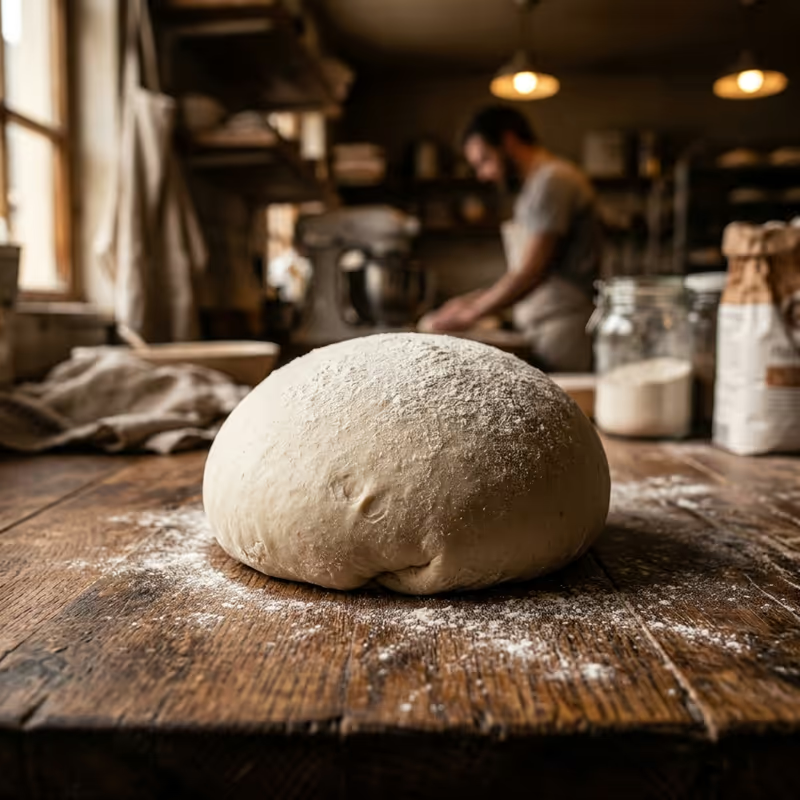
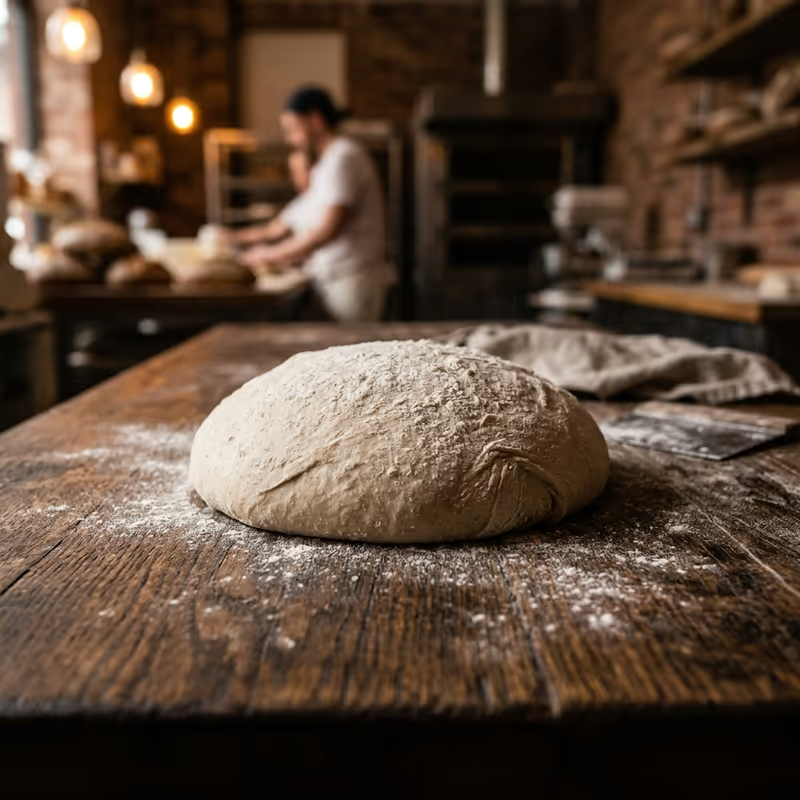
A well-shaped boule looks taut. The surface has a faint sheen. Press it lightly and it pushes back. A poorly-shaped boule looks slack. You can see the gluten still slumped on itself, and the dough spreads as soon as you turn your back.
The pre-shape is a loose, rounded gathering of the dough done about 30 minutes before final shaping. It looks pointless: you're just shaping it, then shaping it again. It isn't.
Two things happen during the bench rest between pre-shape and final shape:
The pre-shape itself is brutally simple. Tip the bulked dough onto a lightly floured counter. Use a bench scraper and your dominant hand to gather the edges underneath, rotating a quarter-turn each time, until you have a loose round with a smoother top. Stop. Cover with a tea towel. Walk away for 25 minutes.
Once the bench rest is done, the dough should look slightly relaxed but still holding a soft dome. If it has pancaked, you over-bulked.
Boule (round): flip the rested dough seam-side up. Letter-fold it (top third down, bottom third up). Give it a quarter-turn and letter-fold again. Then flip it seam-side down and use a bench scraper plus a cupped hand to drag the dough toward you, building tension across every direction. Three or four drags. The skin should go drum-tight and the dough should resist further pulling.
Batard (oblong): flip seam-side up. Roll the top edge down to the centre, press to seal. Roll the bottom edge up to meet it, press to seal. Then take the right edge, fold it across, and roll the dough away from you like a jellyroll, sealing each turn with a flat hand. The result is a tight cylinder with a clear seam underneath.
In both cases the final move is the seal. Pinch the seam closed with your fingers; if it isn't sealed, the loaf tears along that line during oven spring.
 Slack pre-shape
You don't need a thermometer for shaping. You need fingertips and a wrist.
The jiggle test: lift the dough off the counter on the back of your hand and gently bounce it. A well-bulked, ready-to-shape dough wobbles back and forth like firm jelly: there's give, but it returns to shape. An under-bulked dough feels stiff and dead, like a putty ball; needs more bulk. Nine times out of ten a dough that never gets lively traces back to a sluggish culture, so it's worth getting how to make a sourdough starter from scratch right before you blame the shaping. An over-bulked dough sloshes and won't return; bake it as a flatbread, you've lost the loaf.
The surface read: the dough should look matte but not dry, like the inside of a peach. Glossy = under-fermented and slack. Crusty patches = over-fermented and the gluten has degraded.
The poke test (final-proof companion): after shaping and cold retard, poke the dough gently with a wet finger. The dent should fill back about three-quarters of the way in 5–10 seconds. If it springs back fully, more proof time. If it doesn't spring back at all, it's already over-proofed and into the oven, fast.
Here's the workflow if you're staring down a bulked dough right now:
After roughly 400 bakes, the only shaping advice I trust myself with is this: stop sooner than you think you should. The first time the skin goes drum-tight is the moment to put the dough down. Three more drags will tear what you just built.
Try baking the Four-Flour Power Sourdough to see these principles in action.
Use the Lab to dial in hydration, salt, and timing — so when you reach the shape, the dough is ready to take it.
Shaping is the moment you commit. Until now you were a witness — watching enzymes, microbes, and time do their slow work. Now you're the architect. Build the skin, seal the seam, and trust that the loaf you handed over will rise to meet you in the oven.
Look for visual cues: the dough has increased by about 30-50% in volume, the edges are domed against the bowl, and it "jiggles" elastically when shaken. Tiny air bubbles should be visible just under the surface.
Bacteria produce too much acid, which begins to break down the gluten network. The dough loses its structural integrity, becomes sticky, and will "pancake" in the oven instead of showing a strong oven spring.
Higher temperatures favor lactic acid bacteria but also accelerate acetic acid production if the starter over-matures. In the heat, the fermentation "gas pedal" is floored, making it easier to overshoot the optimal flavor profile.