TechniqueFermentationFlavor
Cold Retard: Why Your Best Loaves Sleep in the Fridge
9 min read
Intermediate
What actually happens to dough overnight at 4°C, how long is too long, and the 12-18h schedule that turns flavour and timing into freedom.
 ArtisanCrust
Eleven o'clock at night. You slide the shaped boule into the fridge, set an alarm for seven, and try to sleep. By two in the morning you're awake. Is it overproofing? Is the skin drying out? Should you have left it warmer, or colder, or shorter? You stare at the ceiling and decide to bake earlier just in case.
That paranoia is the cold retard's only real flaw. The dough is fine. It's been fine for an hour, and it'll be fine for sixteen more.
Here's the thing nobody tells you up front: cold retard isn't a slow proof. It's a different process entirely. When the shaped dough hits 4°C, three populations of organisms get treated very differently by the chemistry.
Wild Yeast is the most temperature-sensitive of the bunch. Below 6°C its metabolism drops to roughly 10% of room-temperature activity. That's why your dough doesn't keep ballooning overnight: the yeast effectively goes to sleep. LAB (lactic acid bacteria), on the other hand, are stubborn. They keep producing acid through the night, especially the acetic acid that gives long-retarded bread its sharp, vinegary edge. And the enzymes already mixed into the dough (amylase, protease) don't care about your fridge at all. They keep snipping away at starches and proteins, just more slowly.
So what looks like a paused loaf is actually still working. Just on the things that matter most for flavour, skin tension, and digestibility, not on visible rise.
Warm fermentation tastes milky. Cold fermentation tastes complex. That isn't a vague aesthetic claim. It's pH chemistry.
At 24°C, LAB shifts toward lactic acid production: soft, yogurt-like, dairy-adjacent notes. Drop the dough to 4°C and you tilt the same bacteria toward acetic acid, the sharp, vinegar-like compound that defines a classic San Francisco sourdough tang. After a 16-hour cold retard, your dough's pH falls from about 4.5 to around 3.8. That single decimal-point drop is the difference between mild and assertive.
The other half of the flavour story is Maillard precursor build-up. Amylase keeps breaking starches into sugars during the cold. By morning, the surface of your dough holds more free sugars than it did at shaping, and free sugars are what brown into the deep caramel crust you're chasing. Pull a cold-retarded loaf straight from the fridge into a 250°C oven and the colour develops within the first 12 minutes. Same dough warm-proofed? You'll wait twice as long for half the colour.
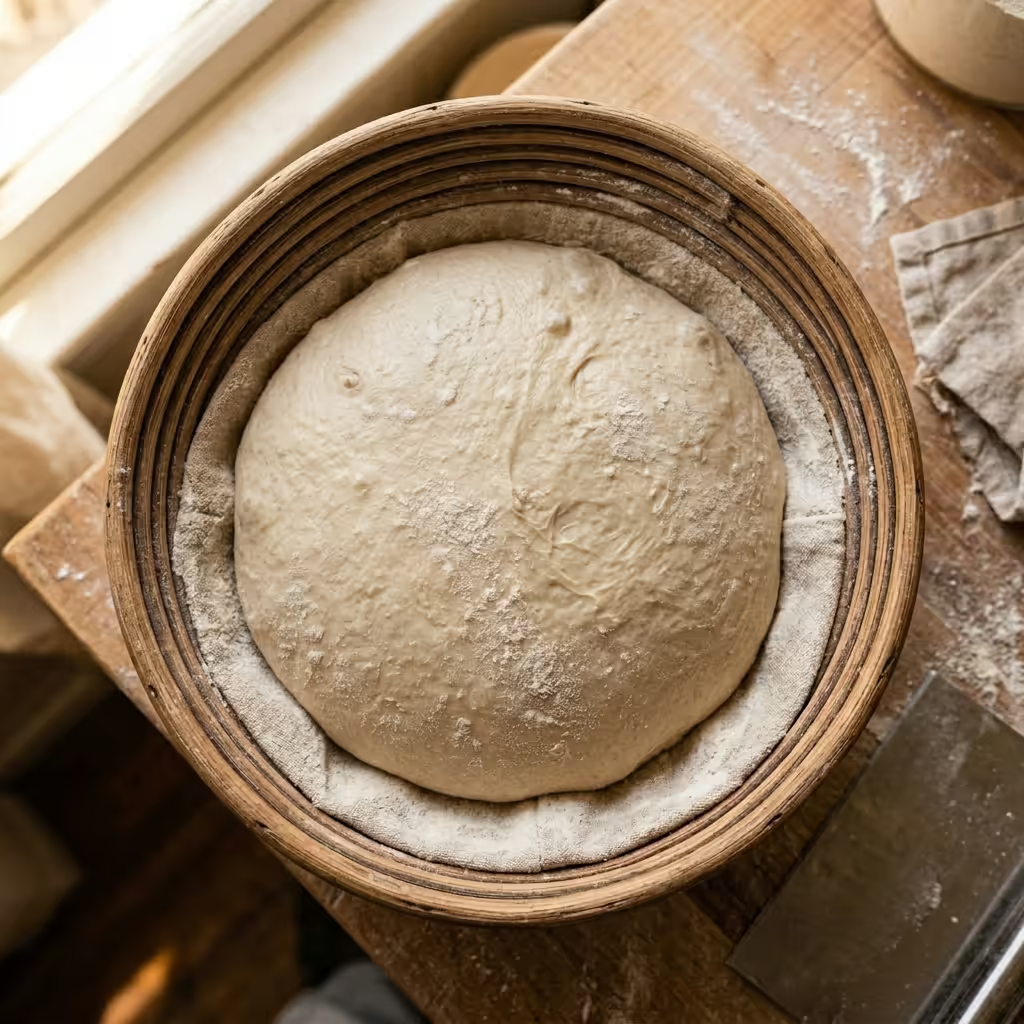
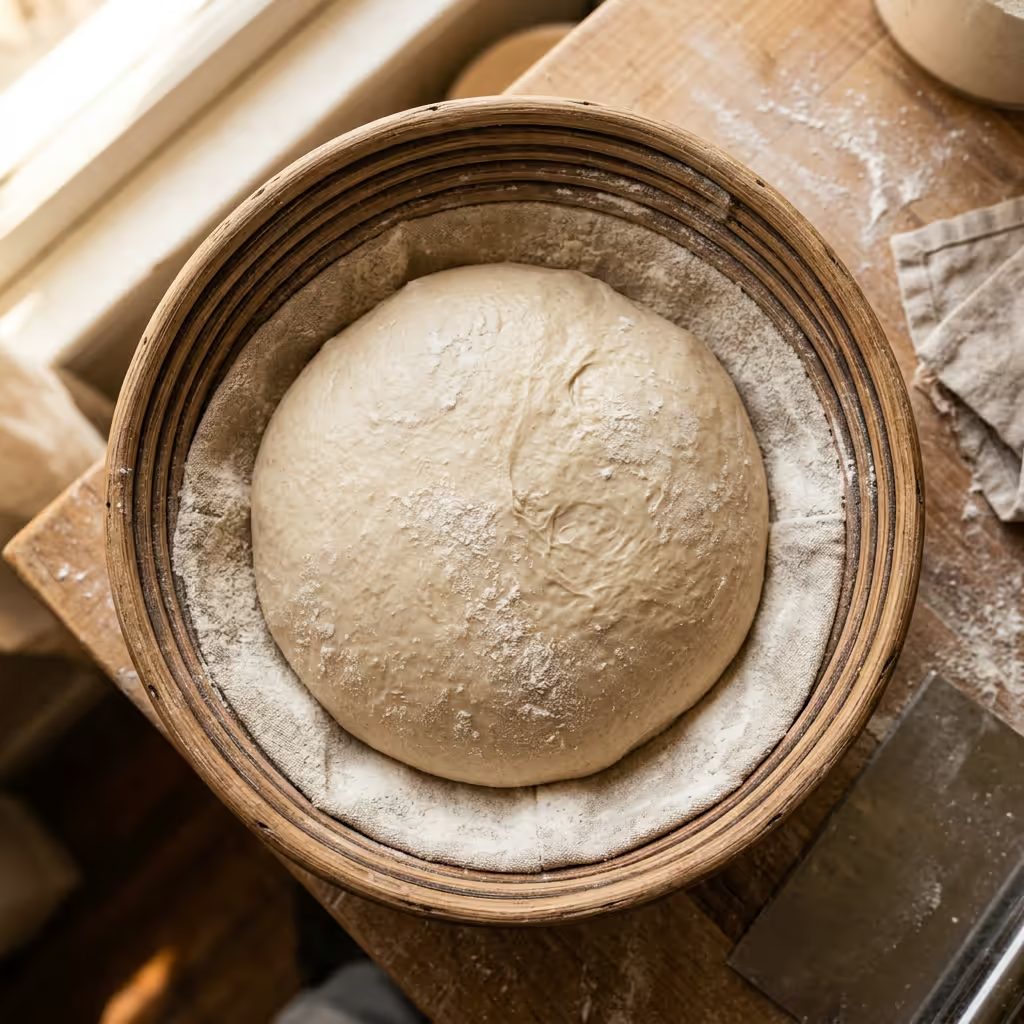 Just shaped
There isn't one right number. There are bands, and each band changes what the loaf becomes.
8-12 hours: the convenience retard. Modest flavour gain, easy scoring, perfect for "shape at night, bake before work." The dough will look basically the same at the bake as it did at shaping.
12-18 hours: the sweet spot. This is where you get the full flavour payoff, a properly tight skin, and a dough cold enough to score with surgical precision. Most of my best loaves live in this window.
18-36 hours: the deep retard. Pronounced tang, deeper caramel crust, slightly lower oven spring as the gluten starts to soften from prolonged acid exposure. Use a strong bread flour (12%+ protein) or you'll lose structure.
Past 36 hours: the gluten loses its hold. The loaf will bake flatter and denser. Sometimes that's exactly what you want: focaccia and pan pizza thrive here. For a tall boule, treat 36 hours as the outer wall.
A small thing nobody mentions: fridge temperature varies. The top shelf of a domestic fridge usually runs 6-8°C; the bottom drawer is closer to 2-4°C. Same dough on different shelves will give you different bakes. After about 200 overnight retards in the same kitchen, I started leaving a small thermometer on the shelf where the bannetons sit. It's the cheapest accuracy upgrade in this hobby.
Here's the workflow I'd run starting tonight:
Try baking the 72-Hour Artisan Sourdough Pizza to see these principles in action.
Calculate hydration, salt, and timing in the Lab, then leave the math in the fridge while you sleep.
Cold retard is the patience tax that pays you back twice — once in flavour, once in the freedom to bake when you actually want to. Once you trust the fridge, you stop being a slave to the timer, and the loaf you pull out at seven in the morning is the one you couldn't have made any other way.
Look for visual cues: the dough has increased by about 30-50% in volume, the edges are domed against the bowl, and it "jiggles" elastically when shaken. Tiny air bubbles should be visible just under the surface.
Bacteria produce too much acid, which begins to break down the gluten network. The dough loses its structural integrity, becomes sticky, and will "pancake" in the oven instead of showing a strong oven spring.
Higher temperatures favor lactic acid bacteria but also accelerate acetic acid production if the starter over-matures. In the heat, the fermentation "gas pedal" is floored, making it easier to overshoot the optimal flavor profile.