MicrobiologyBeginnerDigestibility
Sourdough Fermentation Science: What Happens in Your Jar?
7 minute read
Intermediate
Delve into the microbial symbiosis of wild yeast and lactic acid bacteria, and understand the chemical background of the perfect bread.
 ArtisanCrust
Sourdough is not just a mixture of flour and water; it is a dynamic and self-regulating ecosystem. When you look at the bubbling jar on your kitchen counter, you are witnessing an invisible, yet highly organized biological process.
Every single bubble and aromatic note is the result of a precisely coordinated microbiological "dance." To bake at a master level, you must understand how this living community works.
Unlike store-bought (industrial) yeast, wild yeast strains work slower but are richer in aromas. Their main task is biological aeration: breaking down the grain's sugars to produce Carbon Dioxide ($CO_2$) and alcohol. This gas gets trapped in the gluten network, creating the dough's structure and the spectacular oven spring. None of this happens without a healthy colony to begin with, so if your jar isn't bubbling yet, start with how to make a sourdough starter from scratch.
Although the yeast does the visually obvious work, the bacteria outnumber it by a ratio of 100:1. They are responsible for the sourdough's complexity:
Did you know? In a single gram of mature sourdough, billions of bacteria and millions of yeast cells live in perfect harmony.
The flavor profile of sourdough is not a matter of luck, but controllable chemistry. Like a microbiological conductor, you decide using hydration and temperature whether the end result will be softly milky or characteristically sour.
Fast, industrial proofing merely "inflates" the dough with gases. In contrast, during slow, sourdough fermentation, the enzymes have time to do the heavy lifting: the chemical transformation of the grain's components.
During the long fermentation, the bacteria and enzymes practically "pre-digest" the dough:
Before you begin bulk fermentation, learn how Autolyse and Fermentolyse prepare the dough to trap gases.
Microbes don't use a clock, they use a thermometer. Every degree Celsius change alters the fermentation curve and bacterial activity.
Interactive Analysis
Hover over the curve to understand how the acid balance changes as temperature rises.
Alongside science, the baker's eye is also important. You must learn to recognize the moment when the dough has reached its maximum gas-retaining capacity, right before the acids weaken the structure.
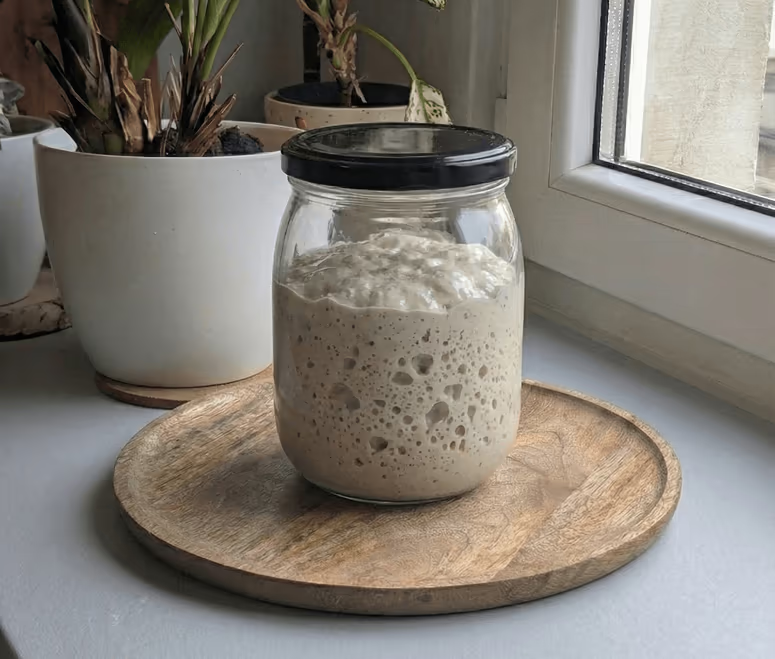
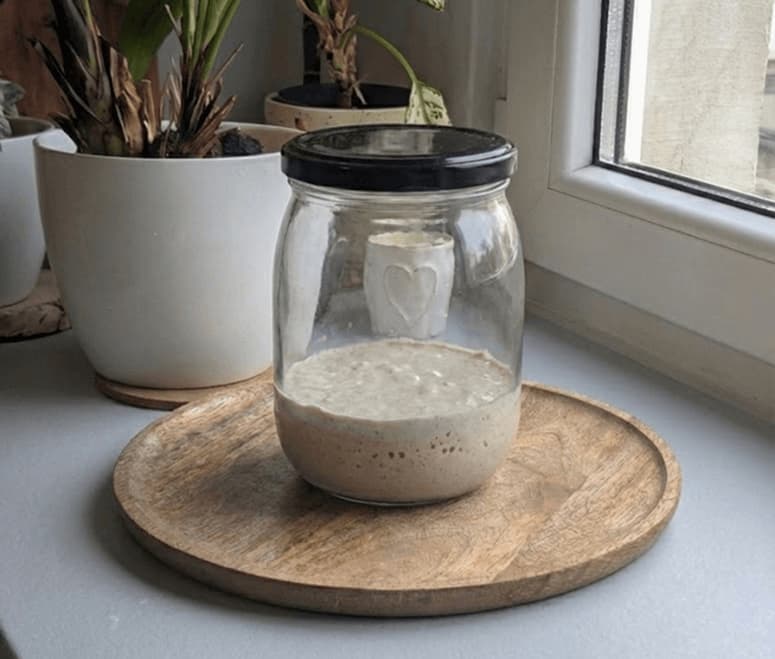 Underproofed
After three years of weekly bakes in the same kitchen, I've stopped trusting the timer entirely. At 24 °C my dough is done in about five and a half hours, and the jar smells like Greek yogurt long before any clock would tell me to act. Your kitchen has its own rhythm — once you learn to read it, the timer becomes a backup, not the boss.
Fermentation is not just a technical step; it is the birth of the bread's "soul." Patience, conscious temperature control, and respect for time are the three most important tools in your hands. Once you understand what happens in the jar, you are no longer following a recipe, but guiding a process.
Use science in your kitchen! Calculate the exact proportions for your test dough in the Lab.
Look for visual cues: the dough has increased by about 30-50% in volume, the edges are domed against the bowl, and it "jiggles" elastically when shaken. Tiny air bubbles should be visible just under the surface.
Bacteria produce too much acid, which begins to break down the gluten network. The dough loses its structural integrity, becomes sticky, and will "pancake" in the oven instead of showing a strong oven spring.
Higher temperatures favor lactic acid bacteria but also accelerate acetic acid production if the starter over-matures. In the heat, the fermentation "gas pedal" is floored, making it easier to overshoot the optimal flavor profile.