 ArtisanCrust
Why slicing a hot loaf gives you gummy paste, what starch is doing as the crust crackles, and the wait that turns a good bake into a great one.
The boule comes out of the Dutch oven roaring. You set it on the counter, and the crackling starts almost immediately. That thin, glassy sound bakers call the song. You wait three minutes. You can't help it. You cut. The knife drags through wet paste, the crumb stretches like chewing gum, and what looked like a perfect bake on the outside is suddenly a soggy disappointment in your hand.
That gummy disaster wasn't a baking mistake. It was a cooling mistake. The loaf simply wasn't done yet.
When the bread leaves the oven, the inside is still around 95–98°C and the outside has just dropped from a roaring 230°C surface to maybe 130°C. The crumb you see on a sliced loaf (open, springy, dry to the touch) does not yet exist. What's in there is hot, half-set starch suspended in steam. Cut into it now and the steam collapses, the starch smears, and the cells you worked so hard to build through bulk and shaping flatten into paste.
The fix is not patience for its own sake. It's chemistry running on its own clock.
Starch retrogradation is the name of that clock. As the crumb cools below roughly 60°C, the amylose and amylopectin molecules (those long chains that gelatinized in the oven) start to re-crystallize into a stable, elastic network. That re-crystallization is what makes a crumb feel like crumb instead of pudding. It needs time, and it needs the loaf to sit undisturbed while the heat trickles out from the centre.
The crackling you hear is not just satisfying. It's information.
As the crust cools from 130°C toward room temperature, it contracts faster than the wetter crumb behind it. That mismatch creates craquelure, the fine network of cracks across the surface, and the audible song is the gelatinized surface starch fracturing along those lines. A bread that sings loudly usually means a well-hydrated dough (the contrast between dry crust and moist crumb is sharp), a properly long bake (enough crust thickness to crack), and a hot enough oven to gelatinize the surface starch into that lacquer-like sheen.
Meanwhile, inside the loaf, water is leaving. A 1 kg dough that went into the oven at 1000 g comes out at roughly 850–880 g. Most of that 12–15% bake loss happens during the bake itself, but the last 1–2% leaves during cooling, in the form of steam exhaling out of the crumb. You can feel it: hold your palm over the loaf at the ten-minute mark and you'll feel warm, damp air rising. That's what wets a knife slicing in too early.
The song of the bread peaks in the first 5–10 minutes after the bake and tails off as the crust equalizes. If you don't hear it, the loaf is either underbaked (no crust crystal layer to crack) or under-hydrated (no moisture differential to drive the contraction). Try a higher oven temperature for the first 20 minutes next time, and add steam. The gelatinized surface that gives you the crackle is also what gives you the deep mahogany shine.
Set a hot loaf on a wooden board and the bottom crust seals against the wood. Steam can't escape downward, so it condenses against the underside of the bread, and within twenty minutes you have a leathery, slightly damp base that no oven can fix. Same loaf on a wire rack: air flows under and around, vapour leaves on every side, and the crust stays uniformly crisp.
It sounds like a small thing. After about 500 boules in the same kitchen, I've stopped trusting the touch test for doneness and started trusting the rack test instead: if the bottom crust is still soft after a one-hour cool, something earlier in the chain went wrong (usually underbake, sometimes a too-cold cooling space). The rack tells the truth.
The other quiet rule: don't cover a cooling loaf. Towels, plastic, even loose foil; any of them traps the escaping steam against the surface and softens the crust. A bare loaf on a bare rack in normal room air is the right answer for the first hour, every time.
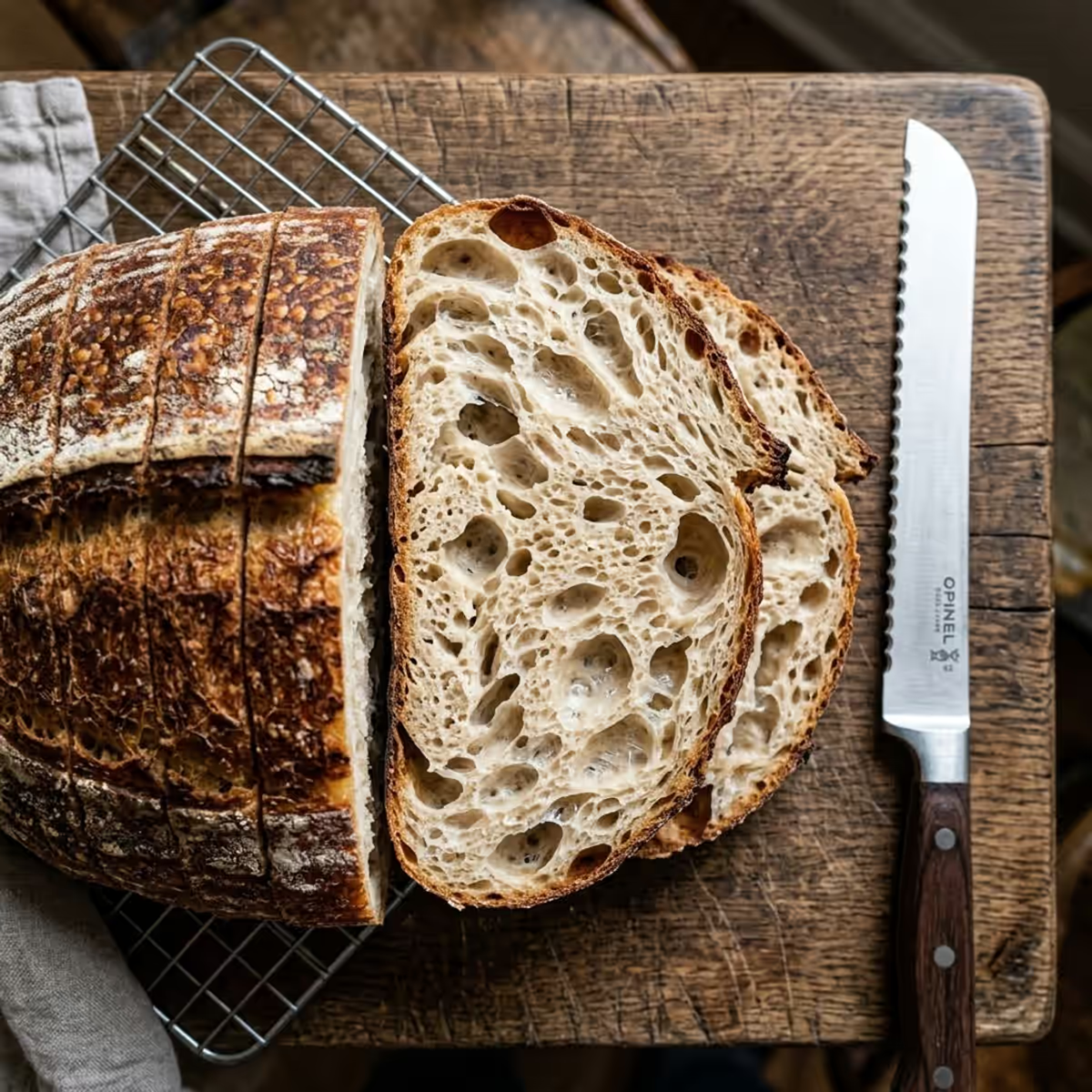
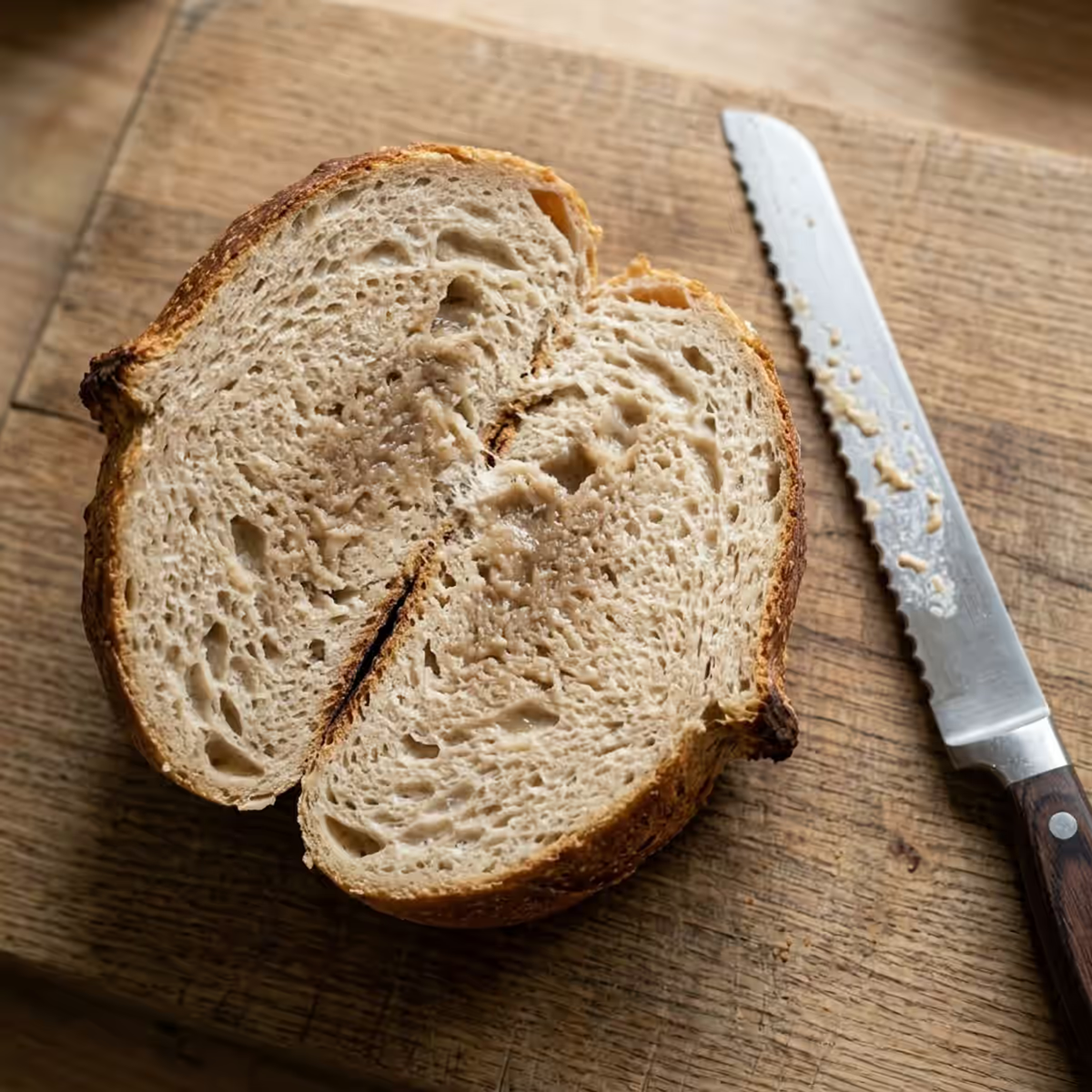 Sliced at 10 minutes
There isn't a single number, but there are useful brackets.
60 minutes is the absolute minimum for a 500 g boule. At this point the internal temperature has dropped to roughly 35–40°C and the amylose has finished its fast retrogradation. You can slice; the crumb will hold its shape. It still won't be at peak texture.
2 hours is when the crumb truly settles. Internal temperature is at room temperature, the crust has stopped exchanging moisture with the air, and a thin slice will feel springy and dry rather than slightly tacky.
4 hours and beyond is the bracket many published bakers (Forkish, Robertson) argue is the actual peak for flavour. By this point the acids have rounded, the aromas have finished blooming out of the crumb, and what you taste is what the loaf actually is. Cut it warm and you taste mostly heat; cut it cool and you taste the bake.
For a larger loaf, say a 1 kg miche or a long batard, add roughly 30 minutes of cool per 250 g of extra weight. You're waiting for the centre to drop below 50°C, and a denser loaf takes longer to lose that heat than a wide, low one does.
If the cool finally exposes a tight, gummy crumb that no amount of waiting fixes, the problem started long before the oven. Everything you taste here was set in motion by the culture in the jar, so it's worth circling back to how to make a sourdough starter from scratch and getting the engine right.
Try baking the Classic Country Loaf to see these principles in action.
Run the timing and hydration math in the Lab so the only thing left to manage is the wait at the end.
Cooling is the part of the bake that asks for nothing and gives you the most. No steam to manage, no temperature to chase, no scoring nerves. Just the loaf, the rack, and an hour of restraint. Trust the song, trust the wait, and the loaf you slice will be the loaf you actually baked.
Look for visual cues: the dough has increased by about 30-50% in volume, the edges are domed against the bowl, and it "jiggles" elastically when shaken. Tiny air bubbles should be visible just under the surface.
Bacteria produce too much acid, which begins to break down the gluten network. The dough loses its structural integrity, becomes sticky, and will "pancake" in the oven instead of showing a strong oven spring.
Higher temperatures favor lactic acid bacteria but also accelerate acetic acid production if the starter over-matures. In the heat, the fermentation "gas pedal" is floored, making it easier to overshoot the optimal flavor profile.