 ArtisanCrust
When to add salt, how to read the windowpane, and why the right mix beats hours of kneading. The science behind step two of every great loaf.
Your dough sits there, a shaggy beige mess. You sprinkle the salt on top, start to mix it in, and within a minute the whole thing tightens up like a drum, fighting your hand. You add another splash of water. It only gets worse.
That's not bad luck. That's chemistry being honest with you.
Salt is the brake pedal of bread. Most home bakers know it slows fermentation, but the more interesting truth is mechanical: sodium chloride restructures the gluten network the moment it touches a hydrated dough. Two things happen at once. First, salt is hygroscopic. It pulls water away from the protein chains, leaving them less mobile. Second, the Na⁺ and Cl⁻ ions act like tiny bridges between negatively-charged sites on gluten strands, cross-linking them into a tighter mesh.
The dough you felt go rigid? That was crosslinking happening in real time. Add salt too early and gluten never gets the slack it needs to develop. Add it too late and fermentation has already run wild. Timing isn't a preference, it's the whole game.
There's no universal answer, but there are three clean approaches. Pick one, run it for ten bakes, and you'll know which one fits your kitchen.
1. Strict autolyse (purist): mix flour and water only, rest 30–90 minutes, then add salt and starter together. Best for very strong, high-protein flour (T65 or above). The dough will be slack at first and tighten beautifully once salt goes in.
2. Fermentolyse (modern default): mix flour, water, and starter, rest 30–60 minutes, then add salt with a tablespoon of reserved water. This is what most working bakers I know actually do. It gives you 80% of the autolyse benefit with half the logistical hassle. One caveat: the starter has to be at its ripe peak before it goes in, so get feeding a sourdough starter right first, or the whole mix is built on a weak engine.
3. All-in (industrial, fast): everything in the bowl at once. Useful when you're short on time or working with a soft, low-protein flour that doesn't need much enzymatic help. Skip this if you're chasing an open crumb.
The reserved-water trick matters more than the timing choice. Hold back 30–50 g of water from your formula and use it to dissolve and incorporate the salt. The dough relaxes when extra water hits it, and the salt distributes evenly without dry pockets.
The safe band is 1.8% to 2.2% of total flour weight. Below 1.5%, the dough is flabby, the bulk runs away from you, and the bread tastes like it forgot something. Above 2.5%, yeast struggles, the crust pales, and the crumb turns dense.
For a 1000 g flour batch, that's 18–22 g of salt. I weigh mine to the gram every time. Volume measures (a teaspoon, a "pinch") are the single biggest source of unexplained flat loaves.
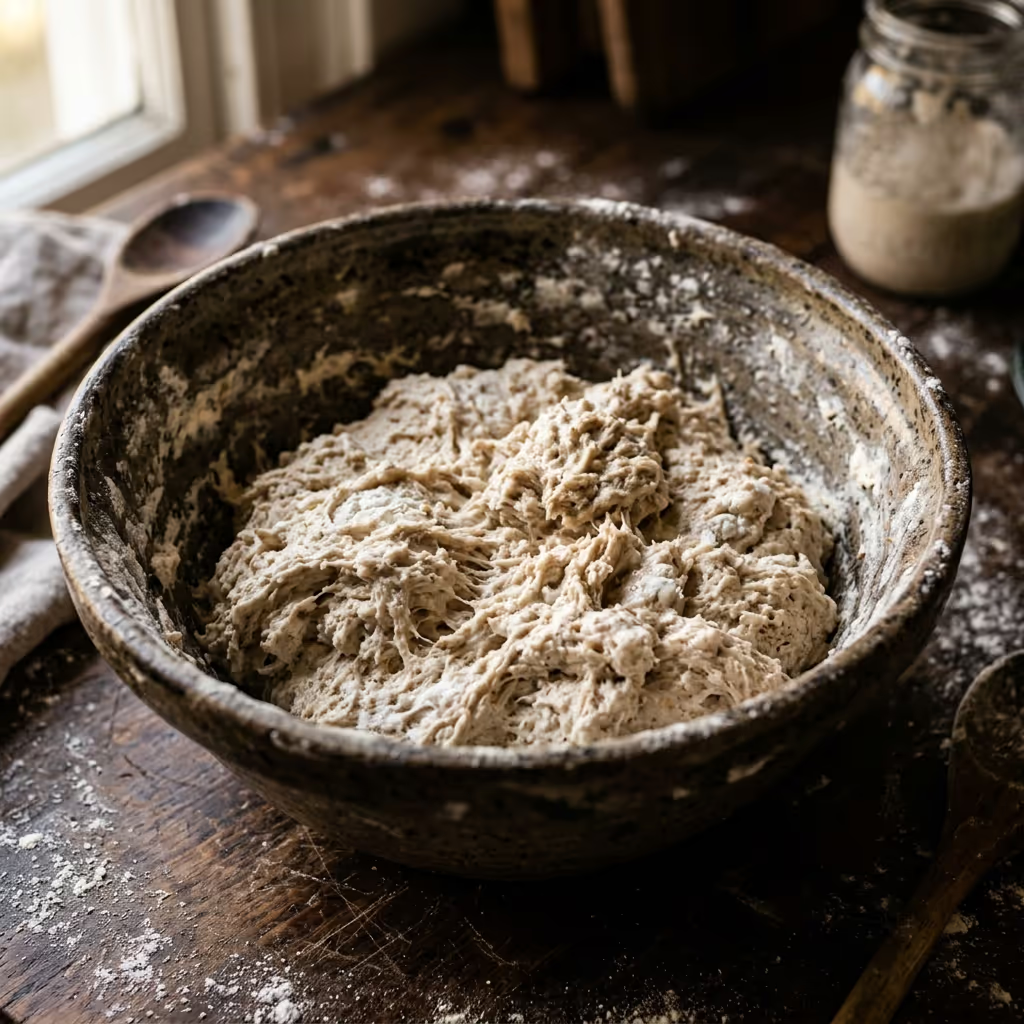 Shaggy mass
You don't need a stand mixer to develop gluten. You need to match technique to hydration.
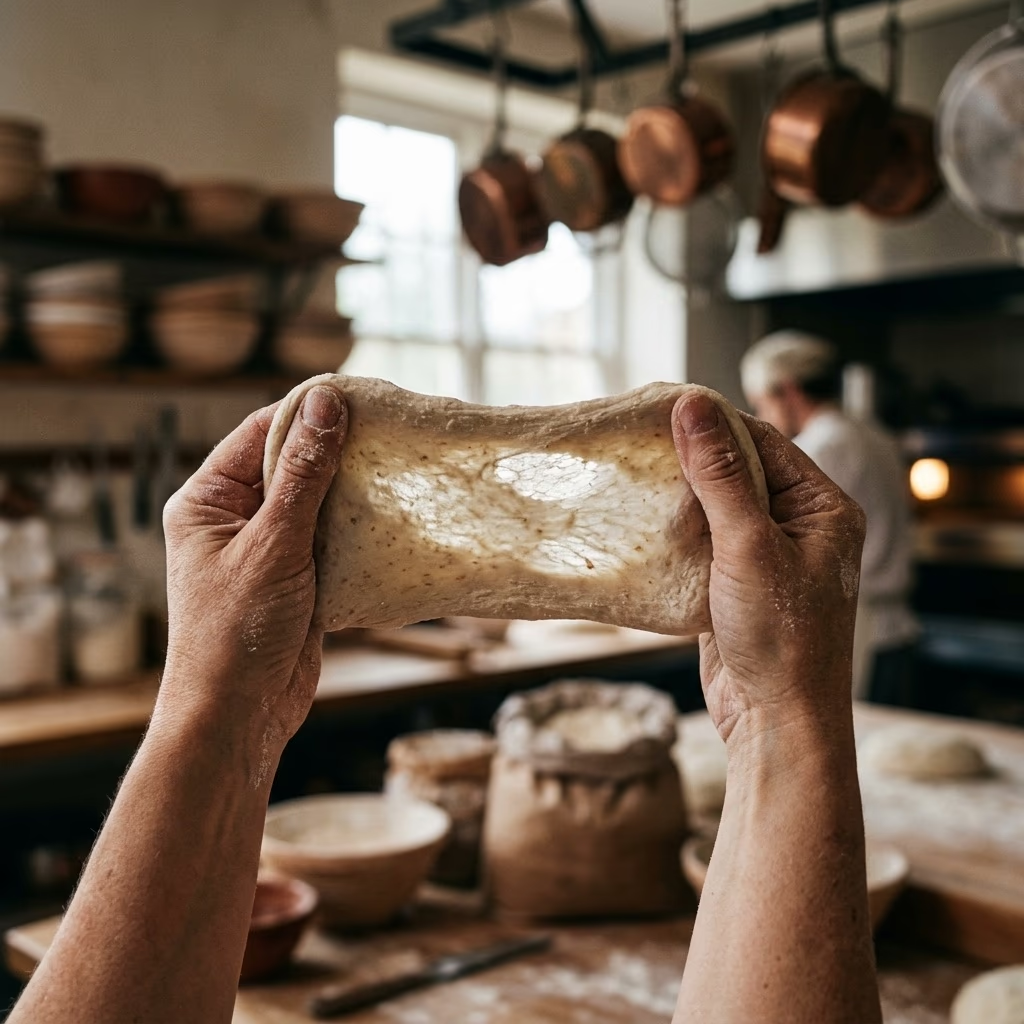
The goal isn't a number of minutes. It's the windowpane: a piece of dough you can stretch until you see your kitchen light through it without it tearing. When you can do that, you have enough gluten to trap gas through bulk and proof.
Here's the workflow I'd run if you're staring at a recipe right now:
After about 300 bakes in the same kitchen, I've stopped counting "kneading minutes" entirely. I count gluten checks. The dough tells me when it's ready, usually after the third fold, sometimes after the second on a strong-flour day.
Try baking the Hearty Rustic Sourdough Loaf to see these principles in action.
Plug your flour weight in, and the Lab returns exact salt, water, and starter quantities at the right hydration.
Mixing isn't a phase to muscle through. It's the first conversation you have with the dough, and the only one where you set the spine of the loaf. Get the timing right, get the salt right, learn to read the windowpane, and the rest of the bake takes care of itself.
Look for visual cues: the dough has increased by about 30-50% in volume, the edges are domed against the bowl, and it "jiggles" elastically when shaken. Tiny air bubbles should be visible just under the surface.
Bacteria produce too much acid, which begins to break down the gluten network. The dough loses its structural integrity, becomes sticky, and will "pancake" in the oven instead of showing a strong oven spring.
Higher temperatures favor lactic acid bacteria but also accelerate acetic acid production if the starter over-matures. In the heat, the fermentation "gas pedal" is floored, making it easier to overshoot the optimal flavor profile.